

Maths (Year 1-6)
February 11, 2026
MOCK EXAM
February 19, 2026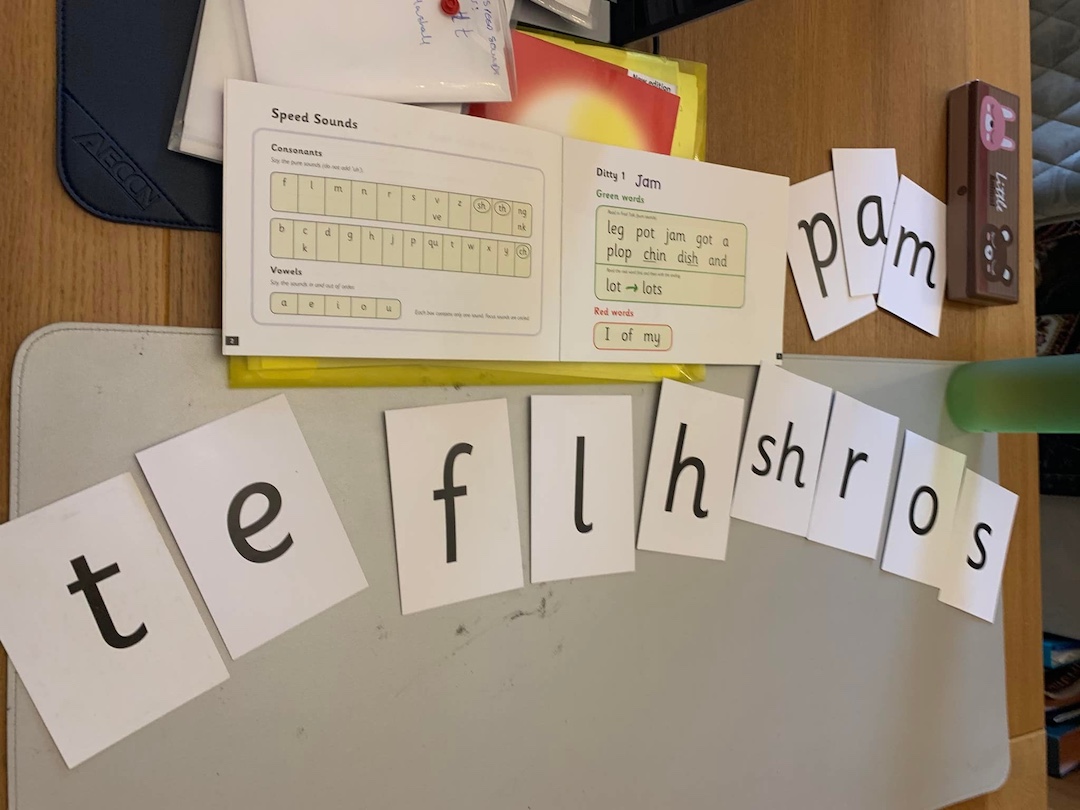
Phonics
Price range: £19.00 through £29.00
Description
Phonics is all about the relationship between sounds (phonemes) and the letters that represent them (graphemes). For a Phonics class, the progression usually follows a “Synthetic Phonics” approach, moving from individual sounds to blending them into full words.
Phonics Curriculum Outline
1. Phonemic Awareness (The Basics)
- Ear Training: Learning to distinguish individual sounds in spoken words without looking at letters.
- Oral Blending: Hearing sounds like $/b/-/a/-/t/$ and orally merging them to say “bat.”
- Segmentation: Breaking a word like “dog” into its three individual sounds ($/d/-/o/-/g/$).
2. Letter-Sound Correspondence (Graphemes)
- Single Letter Sounds: Introducing the alphabet sounds (starting with high-frequency sets like s, a, t, p, i, n).
- Consonant Digraphs: Learning “two letters, one sound” (e.g., sh, ch, th, wh, ck).
- Vowel Digraphs & Diphthongs: Introducing vowel teams like ai, ee, igh, oa, oo and sounds like oi, oy, ou, ow.
3. Word Decoding & Blending
- CVC Words: Reading “Consonant-Vowel-Consonant” words (e.g., cat, pin, hop).
- Consonant Blends: Handling clusters of consonants at the beginning or end of words (e.g., stop, clap, bend).
- The “Magic E” (Split Digraphs): Understanding how a silent ‘e’ changes the vowel sound (e.g., mat becomes mate).
4. Tricky Words (Sight Words)
- Non-Decodable Words: Identifying words that don’t follow standard phonics rules and must be learned by sight (e.g., the, said, was, go).
- High-Frequency Words: Building a “bank” of common words to improve reading fluency.
5. Reading & Writing Fluency
- Sentence Substitution: Swapping words in a sentence to see how the meaning and sound change.
- Dictation: Practice writing simple words and sentences based on the sounds they hear.
- Shared Reading: Moving from individual words to reading short, phonics-decodable books.