
English (Year 1-6)
February 11, 2026
Phonics
February 11, 2026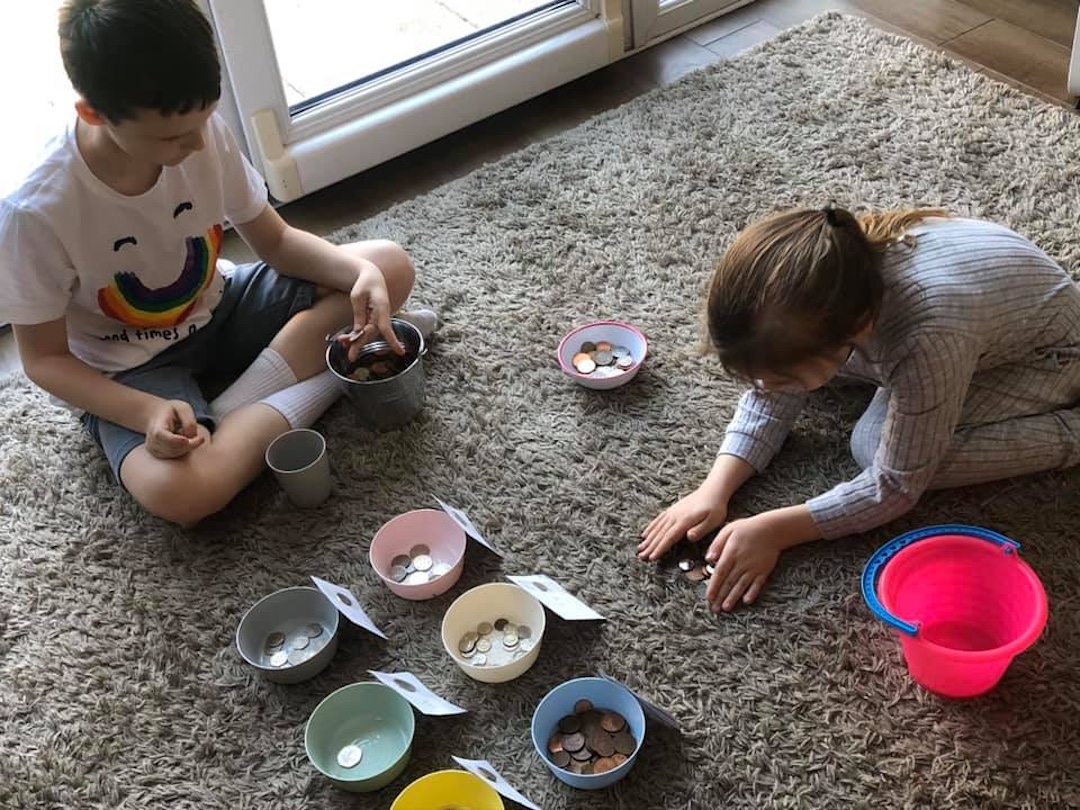
Maths (Year 1-6)
Price range: £39.00 through £49.00
For a primary Mathematics curriculum, the progression moves from concrete manipulation (using physical objects) to abstract problem-solving.
Mathematics Curriculum Overview (Year 1–6)
Year 1: Number Sense & Basics
Students focus on counting to 100, reading and writing numbers, and understanding basic addition and subtraction within 20. They are introduced to simple shapes, measuring lengths with non-standard units, and recognizing the halves and quarters of objects.
Year 2: Calculation Confidence
The focus shifts to the place value of two-digit numbers and mastering the 2, 5, and 10 times tables. Students begin using standard units for measurement (cm, grams, liters) and start solving simple word problems involving money and time.
Year 3: Expanding Operations
Students progress to formal written methods for addition and subtraction of three-digit numbers. They learn the 3, 4, and 8 times tables, start working with unit fractions, and begin to identify horizontal, vertical, and perpendicular lines in geometry.
Year 4: Decimals & Data
This year emphasizes the recall of all multiplication tables up to $12 \times 12$. Students are introduced to negative numbers, decimal equivalents of fractions, and the conversion between different units of measure, alongside interpreting data in bar charts and line graphs.
Year 5: Power & Proportion
Students tackle larger numbers (up to 1,000,000) and are introduced to prime numbers, square numbers, and cubes. They work extensively with improper fractions, percentages, and calculating the area and perimeter of irregular shapes.
Year 6: Algebra & Ratio
The final year focuses on algebraic expressions, the order of operations (BIDMAS), and calculating ratios and proportions. Students master long division and multiplication, learn to calculate the volume of 3D shapes, and interpret complex pie charts for statistics.